As I settle in my return seat, I look back at what a successful weekend that has been. The other side of my medal is event planning and I have enjoyed the ups and downs of the career for over two decades. When in 2020 the chance presented itself to work with an historical Château in Normandy, I jumped to the possibility and embraced the opportunity. I was able to organise a team of suppliers from a distance, to deliver an editorial that also happened to be featured twice. This opportunity led me to become one of the recommended suppliers on the list and, since then, I have enjoyed travelling between Countries and meeting thousands of people from all walks of life.
Little did I know that following that “yes” I would establish long term friendships and would finally enjoy my Pinterest board in real life. I had dreamt of visiting Normandy for a very long time, and this was now a reality.
How the cooking came about
The first time I had the pleasure of cooking at Château de Courtomer, was in the summer of 2023. I had planned the wedding weekend for Meaghan and Brian and their families, and on their last day, coming back from a wine tasting tour, they were in need of a meal. My friend Ralf and I, planned the menu, went shopping to local markets and we prepped a storm. Ralf’s tabbouleh is out of this world, full of flavour. I then opted for a quick pasta al forno, followed by roasted peaches served with amaretto crunch and Chantilly cream. The best part? Receiving a hand written note and an invitation to the US.
Subsequently, I kept on cooking for friends, staff, always for pleasure and for clients. From the first meal in 2023, I established a great network of suppliers, organic produce at 15 minutes from the Chateau, now an Italian deli 25 minutes away and a team of individuals happy to support me at every occasion.
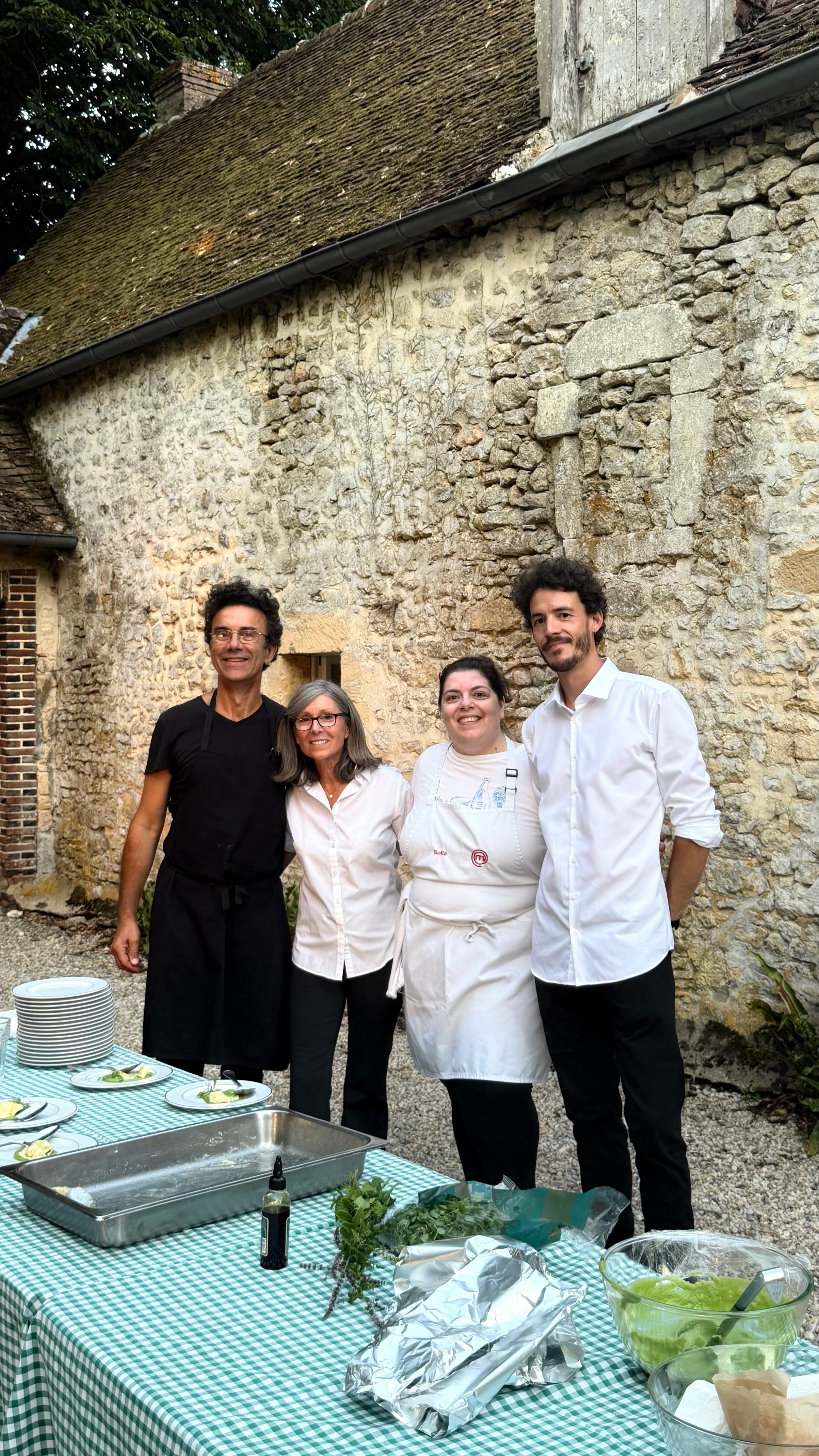
An Italian feast with a pass under the stars
From there on, every year I would enjoy preparing meals at Courtomer. There were the Burrows, and then it came Ms. King and friends, and then it came last weekend.
This was somewhat different: the dinner setting in the Orangerie, without a kitchen in sight, and an International palate from Italy, Poland, France, Serbia, UK to name a few. I always feel a little nervous cooking for Italian families. We are certainly not afraid to express our feelings and we have such high standards. The planning for this meal had to be as meticulous as their wedding. Menu designed and approved and it was time to organise it all. I had an incredible team and an experienced freelance chef I could leave alone in the kitchen. Even when one staff member cancelled right at the beginning of their shift.
One of the grooms’ father curated the wine list and all was paired exceptionally well. They purchased in excess of 150 bottles with some driven all the way from Italy.
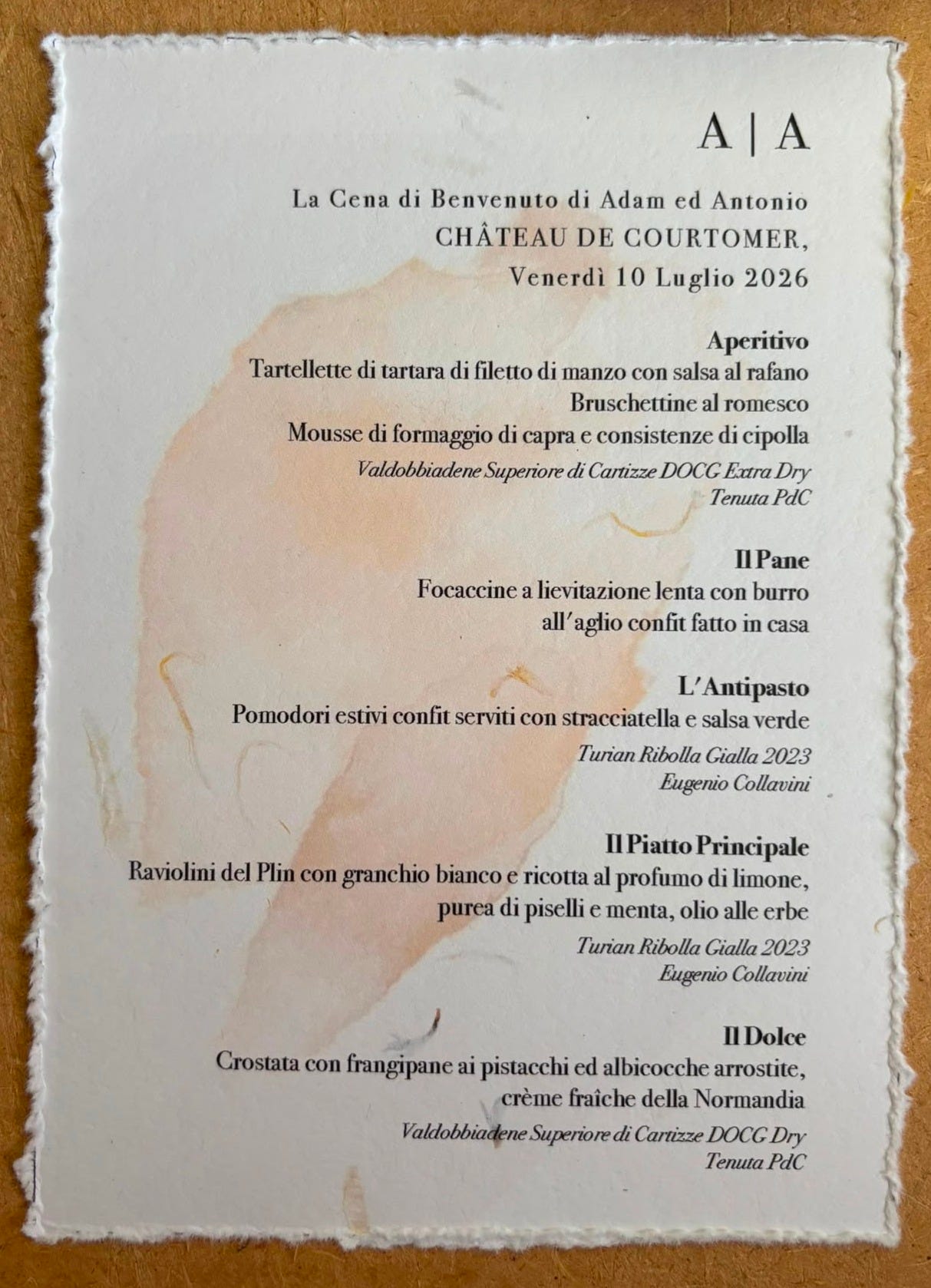
Here the menu, a celebration of bright, summer flavours paired with Italian comfort, balanced seamlessly with rich Normandy produce:
The Location: Château de Courtomer & The Orangerie
Tucked into the lush, rolling hills of Orne in southern Normandy, Château de Courtomer feels less like a venue and more like a portal into 18th-century French aristocracy. Rebuilt on the site of an 11th-century medieval fortress just before the French Revolution, the estate echoes the symmetrical elegance of Versailles, surrounded by 350 acres of quiet parkland and working farmland.
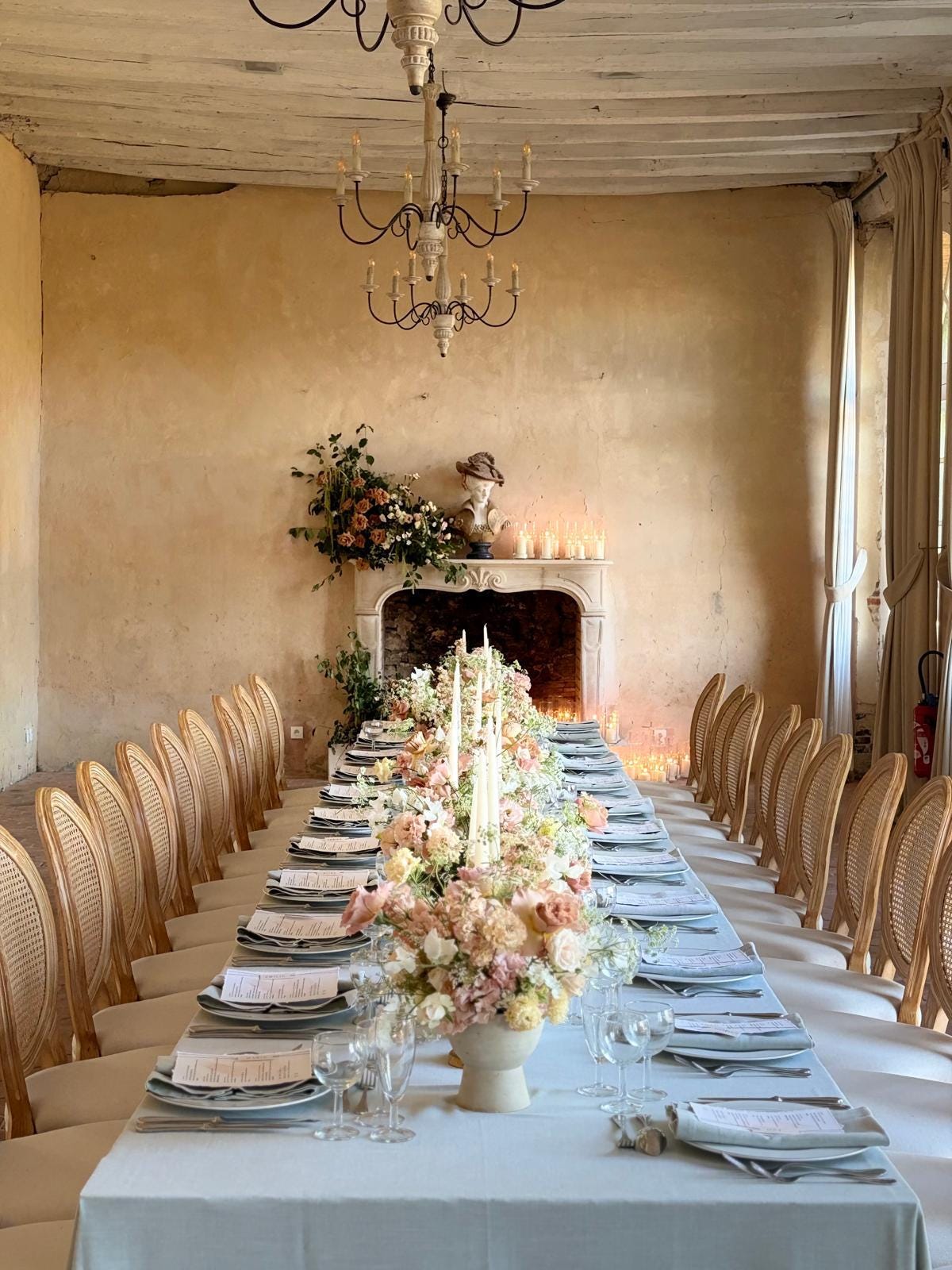
While the grand château holds centuries of history within its walls, our dinner took place in The Orangerie – a sunlit, brick-and-stone jewel nestled within the old walled garden. Historically built to shelter delicate citrus trees through Normandy’s crisp winters, the space features floor-to-ceiling arched French doors that flood the room with soft countryside light.
Stepping into the space, it became clear that the table design needed to feel entirely interwoven with the architecture. A room built to nurture fragile citrus through cold winters demands a setting that feels just as intentional, grounded in rich tradition, yet light and luminous enough to echo the soft afternoon light spilling through the glass doors.


The Setting & Tablescape
To mirror the warm, aged plaster and rustic limestone of the Orangerie, we opted for an effortlessly romantic, garden-led aesthetic. A muted, light green linen runner stretched down the long table, creating a gentle contrast against natural cane-backed chairs. Down the centre, low ceramic vessels spilled over with wild, airy floral arrangements in delicate blush tones, soft peaches, butter yellow, and frothy whites—interspersed with tall, slender cream taper candles to catch the evening glow. It was designed to feel understated yet deeply immersive, as though the surrounding gardens had simply crept indoors for the night.
The Menu Printing & Stationery
That same thoughtful intimacy extended to the stationery. Printed on heavy, hand-deckled cotton paper with a subtle, organic wash of watercolour, the menu served as a gentle nod to the welcome dinner (La Cena di Benvenuto). The rough-trimmed edges and timeless, understated typography gave each place setting an artisanal, keepsake quality before a single dish had even left the al fresco pass.
So why leaving tastes bittersweet?
The worst part of the job isn’t wiping down the counters at night. It’s the quiet that hits immediately after.
One minute the pass is alive, plating up under the open sky while the dusk light turns purple over the stone, and the next, the last wine glass is cleared. Cooking between a château kitchen inside and an outdoor pass outside means you spend days running purely on adrenaline, local butter, and coffee. You get attached to the rhythm. You get attached to the people.
In a place like Courtomer, leaving stings a bit more. It’s never just about packing away my knives. It’s the abrupt goodbye to a place that started to feel like home, and to friends, both old faces and new ones, who made the entire week work.


We spent days surrounded by the smell of roasting apricots, garlic confit, and crushed mint floating out into the courtyard. Then the candles burn down to nothing, the laughter dies down, and the estate resets itself as if we were never there. The contrast is sharp. But that’s the deal with events like this: the ache of packing up the suitacases is just proof that what happened at the table actually mattered.


